Cold Chain Refrigeration Solutions in India
Cold chain refrigeration is the complete, temperature-controlled network which safeguards perishables from the point of production to the end consumer.
Any break in this chain results in spoilage, non-compliance and revenue loss. Singhania Refrigeration engineers the complete chain, not just one cold room or compressor, as a fully integrated, performance-tested system within our industrial refrigeration solutions.
We take care of end-to-end design, construction and commissioning from vegetables and fruits cold chain, dairy cold chain to GDP compliant pharmaceutical cold chain.
What Is Cold Chain Refrigeration?
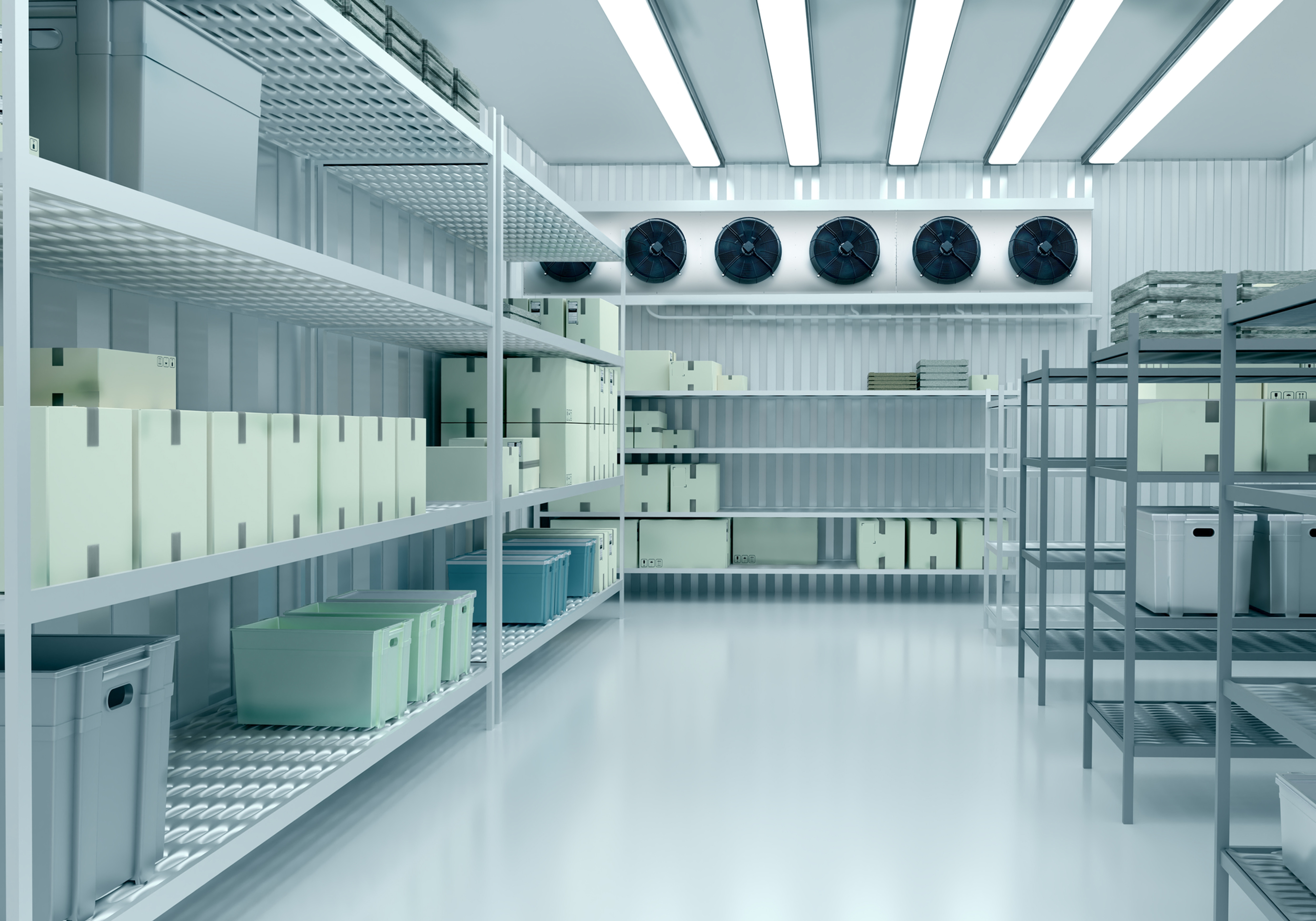
Cold chain refrigeration is defined as the continuous usage of temperature-controlled infrastructure to maintain product integrity throughout every stage of the supply chain. Cold chain refrigeration includes:
- Pre-cooling of products and handling after harvest at the farm or processing facility
- Cold storage facilities such as conventional, CA controlled atmosphere, blast freeze and IQF
- Refrigerated transport including reefer trucks, van coolers and refrigerated containers
- Hubs and distribution centres for multi-temperature cold chain logistics
- Retail refrigerated display cases and cold rooms designed for the point of sale
End-to-End Cold Chain Solutions: What We Deliver
- Cold Storage Plant Design & Build: Turnkey construction of cold rooms, multi-temperature warehouses and refrigerated distribution centres.
- CA Store Construction: Controlled atmosphere storage for long shelf life of fruits, vegetables and exportable produce.
- Blast Freezing & IQF Systems: Quick freeze-down before frozen storage for food processors.
- Ripening Rooms: Banana, mango and tropical fruit ripening rooms with ethylene control.
- Refrigerated Transport Solutions: Reefer truck units, van coolers and container refrigeration systems.
- Cold Chain Consulting: Heat load calculations, feasibility studies, BOQ and ROI modelling.
- IoT Monitoring & AMC: Remote temperature monitoring, alarms and annual service contracts.
Cold Chain for Specific Industry Verticals
- Fruits and vegetables: Pre-cooling, cold storage, CA stores and refrigerated distribution for horticulture producers, FPOs and agri-exporters.
- Dairy products: 0°C to 4°C temperature-controlled storage and distribution for milk, cheese, butter and dairy ingredients.
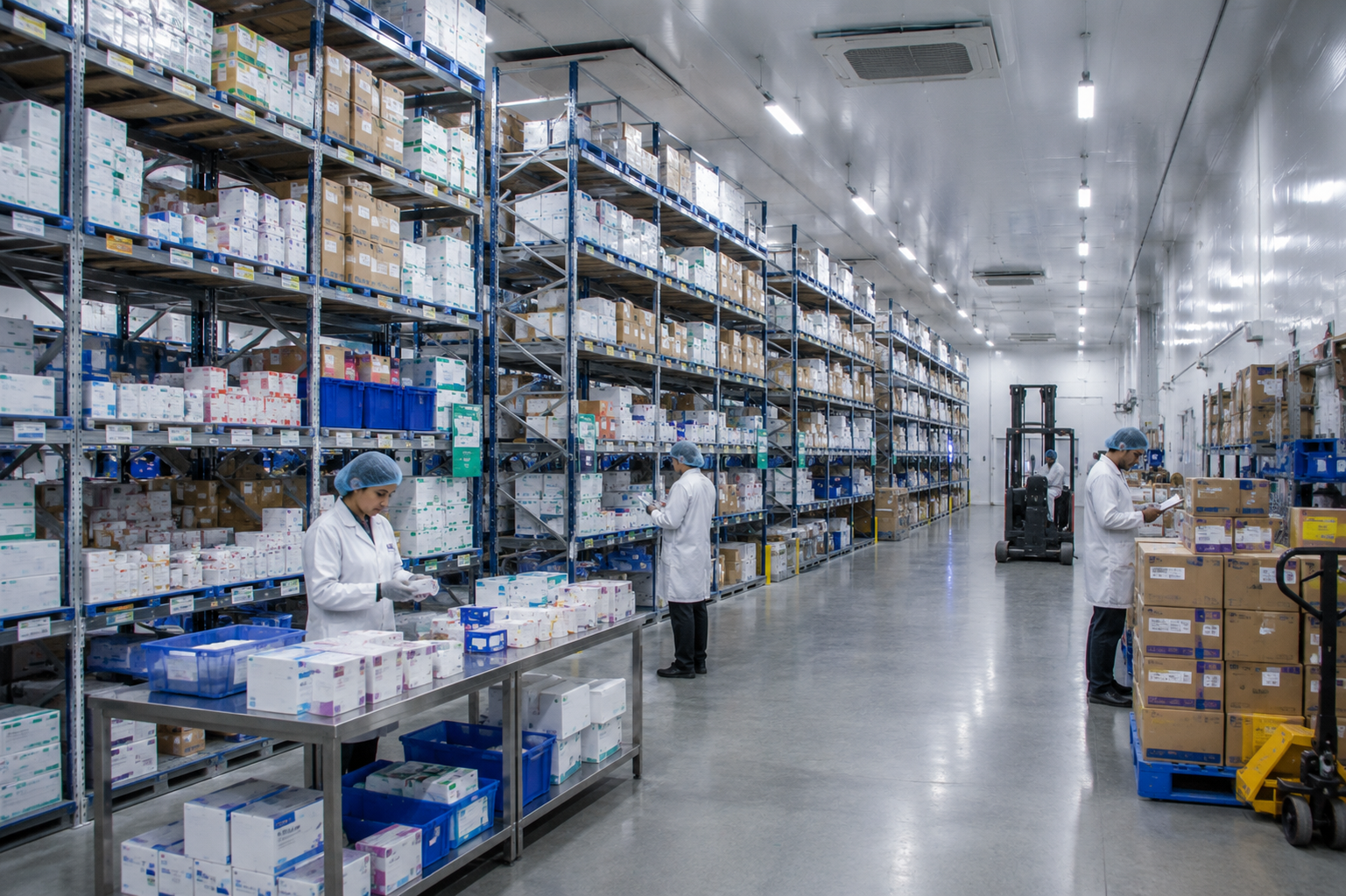
- Pharmaceutical storage: GDP compliant cold rooms at 2°C-8°C and -20°C with mapping, redundant cooling, alarms and audit trail documentation.
Heat Load Study
Capacity, product load, door traffic and ambient conditions are mapped before selection.
System Design
Rooms, panels, refrigeration, controls and safety systems are planned as one package.
Execution
Supply, installation, testing and commissioning are handled by a coordinated team.
AMC Support
Preventive maintenance, monitoring and rapid support keep the chain dependable.
CA Store (Controlled Atmosphere Storage) - Design, Supply & Installation
Controlled atmosphere storage extends the shelf life of fresh produce by carefully controlling oxygen, carbon dioxide and nitrogen inside a sealed cold room.
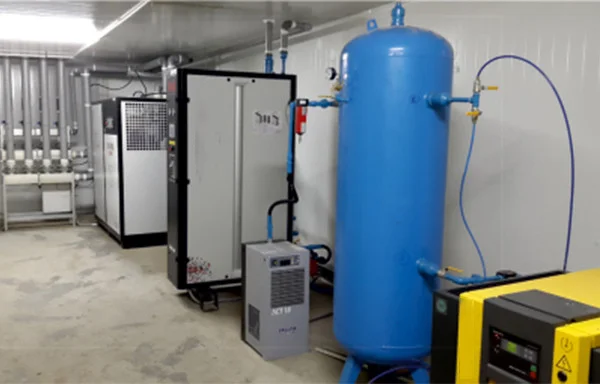
Singhania Refrigeration is a CA Store manufacturer in India and offers complete design, supply and CA Store installation. Our projects include apple CA stores in Himachal Pradesh and export-oriented horticultural CA stores for FPOs.
What Is a CA Store?
A CA store is a specially designed cold storage room in which the atmosphere, temperature and humidity are actively controlled. Oxygen is reduced, CO2 is kept at a set level, and nitrogen is used to flush out the rest of the atmosphere.
CA Store vs Standard Cold Storage - Which Is Better?
| Feature | CA Store | Standard Cold Store |
|---|---|---|
| Atmosphere control | Oxygen, CO2 and N2 controlled precisely | Temperature and humidity only |
| Shelf life extension | 3-12 months longer than standard | Standard shelf life |
| Best for | Apples, pears, kiwi, exotic fruits | Potato, onion, dairy, frozen foods |
| Gases used | Nitrogen, CO2, oxygen scrubbers | Not applicable |
| Cost | Higher capex and opex | Lower capex and opex |
| Sealing requirement | Hermetically sealed room | Standard insulated panel room |
What Gases Are Used in CA Storage?
- Nitrogen (N2): Displaces oxygen from the atmosphere, generally produced on-site using a nitrogen generator.
- Carbon Dioxide (CO2): Controlled at set levels to slow respiration and prevent fungal development.
- Oxygen (O2): Reduced from normal atmospheric level to a low level through scrubbers and nitrogen flushing.
CA Store for Apple Storage
The largest demand segment of controlled atmosphere storage in India is the apple CA store. Singhania Refrigeration designs fully hermetically sealed rooms, onsite nitrogen generation and automated gas monitoring systems for apple storage and other fresh produce.
CA Store Cost India
CA store installation cost depends on storage capacity, number of rooms, gas management complexity, site location and temperature specification. CA cold storage projects tend to command a 30-50% premium over equivalent standard cold rooms.
Ammonia Refrigeration System - Industrial Design, Supply & Installation
Ammonia refrigeration systems are energy-efficient industrial refrigeration plants for large cold storage and food processing facilities.
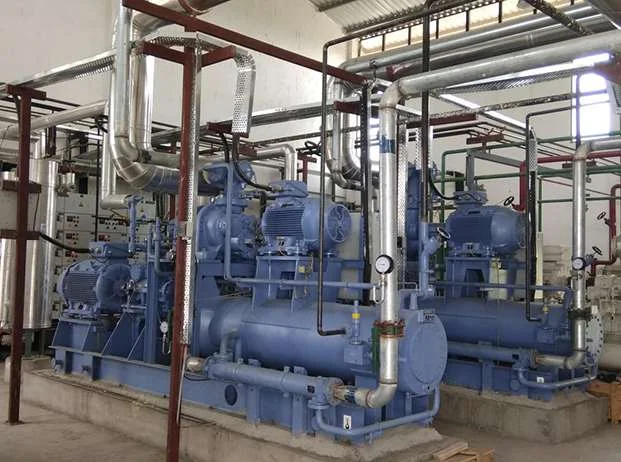
NH3 has zero global warming potential, zero ozone depletion potential and can deliver 20-30% better energy efficiency than Freon/HFC systems at large capacities.
How Does an Ammonia Refrigeration System Work?
- Compressor: Compresses ammonia gas to high pressure and temperature.
- Condenser: Transfers heat to air or water and condenses ammonia back to liquid.
- Expansion Valve: Reduces liquid ammonia pressure and temperature.
- Evaporator: Absorbs heat from the stored product and returns ammonia to the compressor as gas.
Advantages of Ammonia Refrigeration Systems
- High energy efficiency and lower power consumption at large plant sizes.
- Natural refrigerant with zero GWP and zero ODP.
- Lower long-term operating cost over a 15-20 year lifecycle.
- Not subject to HFC phase-down supply risk.
- Strong odour helps leaks become detectable at low concentrations.
Why Cold Storage Plants Use Ammonia
Cold storage plants use ammonia where scale, efficiency and lifecycle savings matter most. It is especially suitable for large warehouses, seafood processing, meat processing, dairy plants and industrial food facilities.
Is Ammonia Refrigeration Safe?
Yes, when designed and maintained correctly. Proper ammonia refrigeration systems include ventilated machine rooms, gas detection, safety relief valves, emergency procedures and trained operators.
Freon / HFC Refrigeration System - Design, Supply & Retrofit
Freon refrigeration systems remain practical for small to medium cold rooms, pharma storage, FMCG, retail and multi-temperature commercial facilities.
Where Freon Refrigeration Works Best
- Small and medium cold rooms below 500 MT.
- Pharmaceutical cold storage where ammonia-free handling is preferred.
- Retail, FMCG and commercial cold chain applications.
- Projects needing quick deployment and broad service availability.
R22 Replacement and Retrofit
R22 replacement involves refrigerant recovery, oil compatibility checks, filter drier changes, expansion valve assessment and recommissioning with a compatible replacement such as R404A, R448A or R449A.
Freon vs Ammonia - Which Refrigeration System Is Right for You?
- Choose Freon if your facility is below 500 MT, requires quick deployment, stores pharmaceuticals or has multiple temperature zones in a commercial setting.
- Choose Ammonia if your facility is 500 MT or larger, involves industrial food processing or requires lowest long-term cost of ownership.
Ammonia vs Freon Refrigeration System - Full Comparison
The right choice depends on capacity, application, safety needs and long-term costs.
| Parameter | Ammonia (NH3) | Freon / HFC |
|---|---|---|
| Refrigerant type | Natural refrigerant | Synthetic HFC / HCFC |
| Best for | Large-scale plants, food processing | Small to medium cold rooms, pharma, FMCG |
| Energy efficiency | 20-30% more efficient at large capacities | Slightly lower efficiency at high load |
| Upfront cost | Higher plant cost, lower running cost | Lower plant cost, higher running cost |
| Safety | Requires trained operators and safety systems | Simpler handling, no special safety zone needed |
| Environmental impact | Zero GWP, eco-friendly | High GWP; phase-down pressure |
| Regulatory status | Permitted for industrial use in India | R22 being phased out; some HFCs under review |
| Maintenance | Specialised AMC required | Widely available service network |
| Best choice when | Scale, efficiency and long-term ROI matter | Quick deployment, smaller capacity, pharma use |
Industries & Segments We Serve
Our cold chain refrigeration systems, CA stores, ammonia plants and freon systems support the full spectrum of temperature-sensitive industries.
Food & Agri Processing
Cold chain for potato, onion, vegetables, dairy, frozen foods and IQF lines.
Horticulture & Exports
CA stores, pre-cooling and ripening rooms for FPOs and agri-exporters.
Pharmaceuticals
GDP-compliant cold rooms for vaccines, APIs and temperature-sensitive medicines.
Seafood & Meat
Blast freezing, IQF tunnels and frozen storage for seafood and poultry.
Logistics & 3PL
Multi-temperature refrigerated warehouses and cold chain hubs.
Retail & FMCG
Back-of-store cold rooms and cold chain infrastructure across outlet chains.
Why Choose Singhania Refrigeration?
Delhi NCR-Based, Pan-India Execution
Headquartered in Okhla Industrial Area, New Delhi, with projects across Delhi NCR and India.
Full Cold Chain Stack Under One Roof
Ammonia plants, freon systems, CA store technology, PUF panels, dock systems and IoT monitoring.
Energy-Efficient by Default
Every refrigeration system is sized to your heat load for lower power bills and better ROI.
Proven Across All Verticals
From apple CA stores to pharmaceutical cold rooms and potato cold storage facilities.
Single-Point Accountability
One team from feasibility to AMC, with fewer coordination gaps and clearer scope ownership.
Compliance-Ready Facilities
FSSAI cold chain norms, APEDA export standards and GDP/GMP requirements built in from design.
Frequently Asked Questions
Ready to Add Quality Monitoring to Your Cold Chain?
Share with us your current facility, transport network and product type — we will evaluate where monitoring delivers the most value and guide you through a live demo.
Call: +91 99710 60822 Call: +91 97180 97170