Food & Beverage
- Potato & onion storage
- Vegetables & fruits
- Dairy products
- Frozen foods
- Ready-to-eat
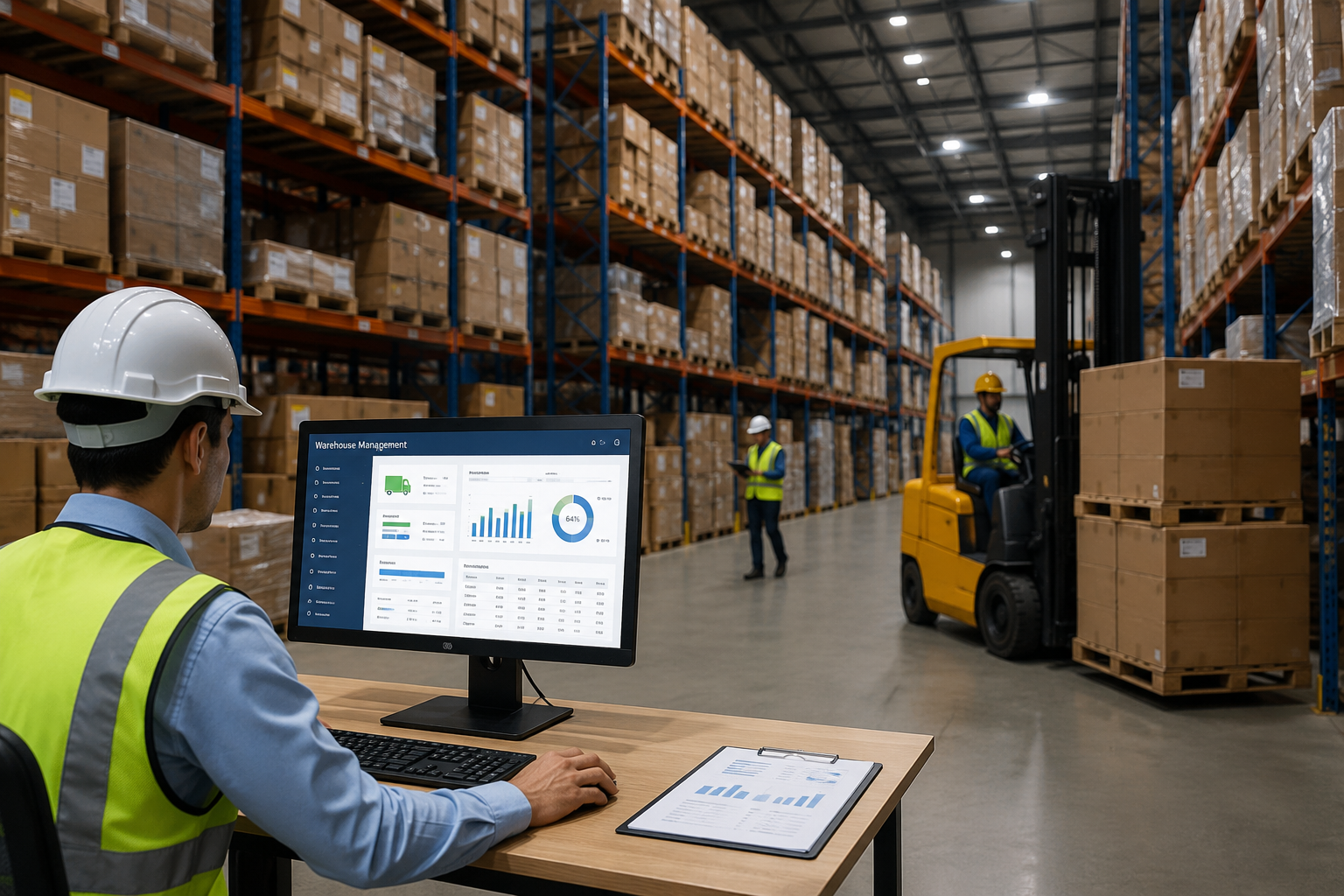
A cold storage warehouse management solution is a comprehensive, system-driven approach to managing inventory operations inside end-to-end cold chain solutions. Singhania Refrigeration manages all facets of warehouse operations including receiving, put-away, batch and location tracking, stock rotation (FIFO/FEFO), space and slot allocation, dispatch sequencing, and integration with your Transport Management System (TMS).
Instead of trying to coordinate manual stock registers, disconnected spreadsheets and verbal handovers between receiving, floor and dispatch teams — all of whom may be working off a different version of what’s actually in the cold room — you run on one system, one stock record and one point of accountability.
This delivery model is also known as a Warehouse Management System (WMS) for cold storage, and is sometimes described as cold storage inventory management, cold chain stock control, or cold room WMS integration. The terminology varies by operation, but the model stays the same: one accountable system from the receiving dock to the dispatch bay.
Singhania Refrigeration’s warehouse management scope includes all of the operational stack, from the receiving dock to dispatch reporting, in one system. No matter if you’re setting up warehouse management for a new cold storage facility or adding it to an existing one, the scope and accountability remain the same.
Incoming stock is logged against location, batch and quantity at the point of receiving, checked against the purchase order or inbound manifest before it’s put away, rather than put on the floor and logged from memory later.
Stock is sequenced according to first-in-first-out or first-expiry-first-out rules, which are set based on the actual shelf life of your product. The stock is automatically flagged for movement as it comes up to its rotation window, so the choice of what goes out next is determined by the system and not a guess as to which pallet is the oldest.
Storage locations are assigned based on product type, temperature zone and available space at the time of put-away — so cold room space is used to its real capacity and not filled wherever happens to be a gap, and high-turnover SKUs are not buried behind slow-moving stock.
Inbound orders are matched to the correct batch and location before loading. The system produces pick lists, rather than having them manually assembled, so dispatch teams pick stock by plan, rather than by searching the floor against the clock.
Every batch is traced from receipt to the order it is shipped against, so if there is a quality issue, recall or customer query, it can be traced back to the exact lot and location rather than leading to a full facility search.
Warehouse data flows through to the TMS touchpoints, so as goods move from storage to transport the one stock record is maintained and a new record is not created at the loading bay.
Our warehouse management solutions support clients in temperature-sensitive industries — wherever stock accuracy, rotation and dispatch speed matter:
Most warehouse stock losses can be put down to a discrepancy between what the system says and what is actually on the floor. When receiving, rotation and dispatch are tracked on paper or in disconnected spreadsheets, ageing stock is missed, slots are double-booked and dispatch teams spend time searching instead of picking.
One system shows where each pallet is, the batch and the age, so the receiving team, floor team and dispatch team are all working from the same record rather than three different ones.
The system produces put-away and pick lists that are not manually compiled, which reduces the time stock waits to be logged or picked.
FIFO/FEFO flags identify stock that is ageing before it becomes a write-off, rather than during a manual stock check.
Slot allocation is decided by real capacity and product type, allowing the facility to stock more usable inventory without over-crowding.
Every movement is logged as it happens, so compliance and customer audits draw on existing records instead of being pieced together after the fact.
Every Singhania Refrigeration warehouse management rollout follows a structured, milestone-driven process — so you always know what is happening and when.
| Stage | Phase | What Happens |
|---|---|---|
| 1 | Discovery & Assessment | Site visit, current process review, SKU and stock-volume profiling, gap analysis against existing registers or spreadsheets |
| 2 | System Design & Configuration | Slotting logic, rotation rules (FIFO/FEFO), user roles, and reporting formats configured to your product mix and facility layout |
| 3 | Data Migration & Integration | Existing stock records migrated into the system; warehouse management linked to TMS touchpoints and any existing refrigeration monitoring |
| 4 | Go-Live, Training & Validation | Led system training for receiving, floor and dispatch teams; run in parallel with the existing process to validate system accuracy before full cutover |
| 5 | Ongoing Support & Optimization | System maintenance planning, configuration changes based on your stock profile evolution, reporting support after go-live |
Choosing the right turnkey contractor is critical to the long-term operational performance of your facility.
Instead of using a generic template, we customize the storage architecture and slotting logic to match your refrigeration system and product mix.
The same stock record is kept from the cold room to the reefer truck thanks to WMS–TMS connectivity, preventing the handover to transport from creating a new paper trail.
FIFO and FEFO sequencing is configured around your product’s shelf life and rotation requirements rather than a single guideline applied to every SKU.
We are the complete cold chain — refrigeration engineering, facility layout, dock systems and IoT-based monitoring, all based on project experience, not a generic software rollout.
Experience executing projects in food processing clusters and pharma parks outside Delhi NCR. Located in Okhla Industrial Area, New Delhi.
Warehouse management includes turnkey construction, refrigeration systems and transport refrigeration — one partner instead of an additional WMS vendor.
We have developed stock rotation and dispatch flow across the full range of cold chain applications, from potato and onion cold stores to pharmaceutical cold rooms, IQF processing lines and refrigerated logistics hubs.
Not just during installation but after go-live — system upkeep, configuration changes and reporting support continues.
Share with us your current facility, transport network and product type — we will evaluate where monitoring delivers the most value and guide you through a live demo.
Call: +91 99710 60822 Call: +91 97180 97170