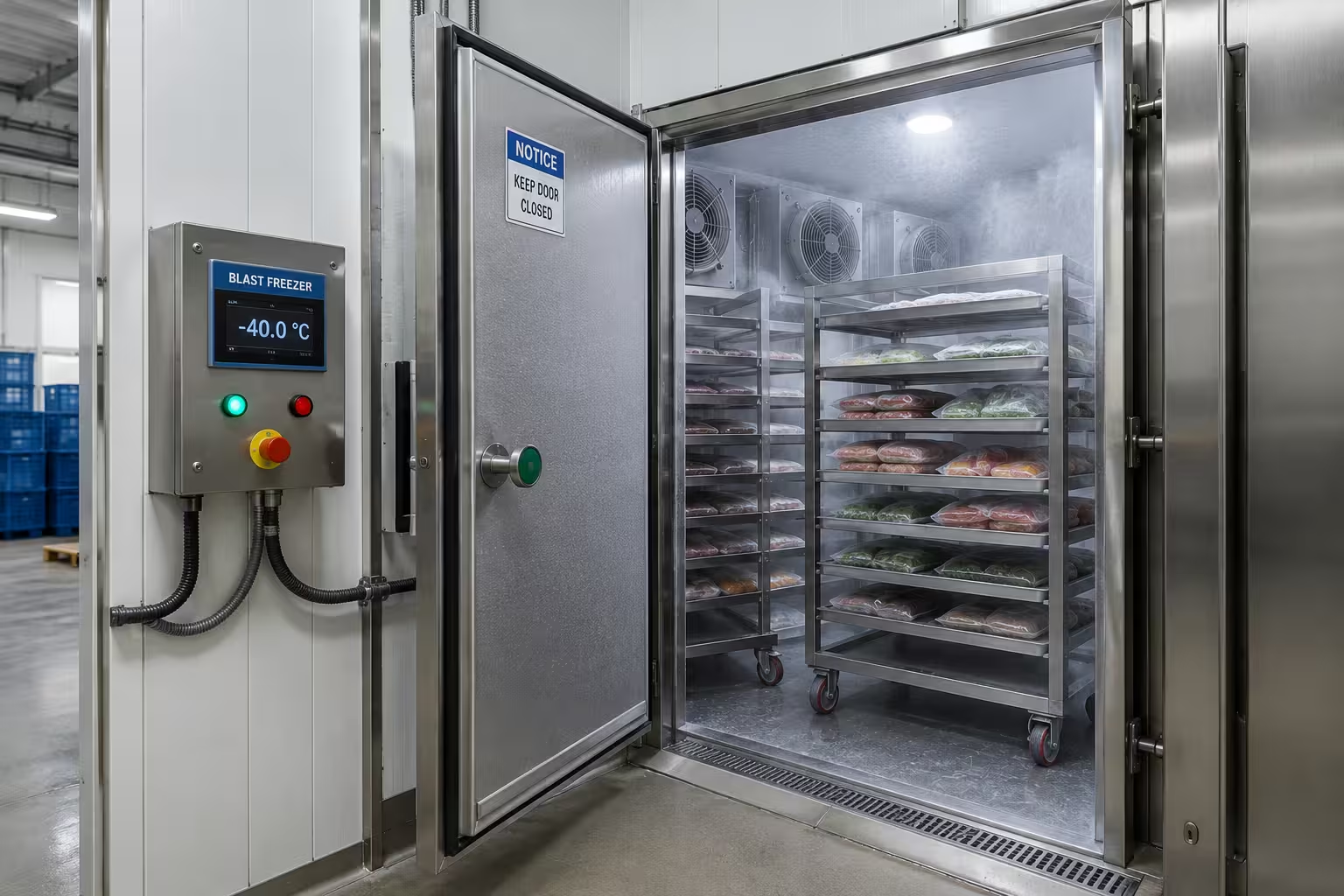
If you have ever removed thawed shrimp from the freezer and discovered that it had lost its firmness and turned limp and watery, you have seen what happens when food is frozen slowly. Standard freezers simply aren't built to freeze food products quickly and correctly, and that's exactly where blast freezers come in. A blast freezer is a specialized piece of industrial equipment used to freeze food products by rapidly removing heat, producing small ice crystals instead of the large ones that damage food texture. If your company is involved in food processing or food export, understanding how blast freezers work is essential. In this article, we'll explain how a blast freezer works, look at the types of systems available on the market, and outline the signs that indicate your business needs a blast freezer today. A blast freezer, also known as a shock freezer or flash freezer, is a specially designed freezing chamber that uses high-speed cold air to freeze food far faster than an ordinary freezer. A typical commercial freezer holds food at around -18°C and takes several hours to freeze it fully, but a blast freezer can drop to between -30°C and -40°C or lower, shortening the freezing period to hours — or even minutes for smaller loads. The difference isn't just the temperature; it's the speed of the freezing process itself. The foundation of these systems consists of three components: extremely low refrigerant temperatures, powerful evaporator fans, and a properly insulated chamber that keeps everything sealed in. Together, these generate cold air that cools the product's temperature far faster than passive air ever could. Instead of letting chilled air simply gather around food as in a traditional freezer, these systems circulate chilled air over the food using powerful blowers. Heat is removed so efficiently that what takes hours in a regular freezer can be done in a fraction of the time. During freezing, liquid water in food turns into ice crystals. When food freezes slowly, the ice crystals grow larger, rupturing cell walls and leaving the food watery after thawing. When food freezes quickly, the water forms small ice crystals, leaving the cell structure largely intact. This is the same principle behind individual quick freezing (IQF), where fruits and vegetables are frozen and packed separately instead of forming a solid frozen block. Not all systems use the same setup. The right installation depends on product volume, product shape, and how continuous the freezing process needs to be. Product travels down a straight, insulated tunnel on a conveyor belt while being constantly bombarded with high-speed cold air. Tunnel systems suit high-volume operations such as seafood plants and bakery lines. Spiral freezer technology uses an upward spiraling conveyor belt to maximize freezing capacity while minimizing floor space. This makes it ideal for facilities with limited space but high freezing volume, such as ready-meal production and poultry processing. Smaller, batch-style trolley or cabinet units suit smaller processors, bakeries, and commercial kitchens that need fast freezing without a full spiral or tunnel setup. Product is loaded onto trays or trolleys and frozen in a controlled cycle for a set time before moving to storage. Behind every reliable setup are a handful of engineering essentials: Performance depends on the weakest link in that chain. Undersized insulation or an underpowered compressor will quietly erode the freezing performance you're paying for. If you're weighing refrigerant options for a new installation, our breakdown of ammonia and Freon refrigeration units covers where each performs best. When done correctly, blast freezing offers several advantages over conventional cold storage: Not every business needs a dedicated cold storage solution — traditional freezing or chilling systems already do a good job for many. But a few signs make the investment worthwhile: If even one of these applies to your operation, it's worth investing in dedicated cold storage. Side by side, the gap between the two becomes clear: Several practical factors determine which system and specifications suit your operation: Making this choice early avoids the costly mistake of undersizing the system relative to your business's growth plans. Most industrial units operate between -30°C and -40°C, with some specialized processes running as low as -60°C for rapid hardening. It depends on the product's type and size, but blast freezing typically takes just a few hours, compared with 6–12 hours in a conventional freezer for a similar load. IQF lines can freeze smaller, individual products in an even shorter window. The two are related but not identical. Blast freezing refers to the freezing process itself, while IQF describes applying that process to keep items like peas, berries, and shrimp loose and separate rather than frozen into a block. Ammonia (R717) and Freon-based refrigerants such as R404A are the most common choices for industrial blast freezing, each with different trade-offs in efficiency, safety, and maintenance depending on the size of the system. Not necessarily. Small bakeries or kitchens are often well served by compact trolley or cabinet units, while high-volume processors, cold storage operators, and export businesses typically need tunnel or spiral systems built for continuous freezing. Getting seafood, meat, or ready-to-eat food frozen for export or long-term storage comes down to matching the right equipment, the right capacity, and the right refrigerant to your specific operation. Singhania Refrigeration specializes in cold chain systems — including ammonia and Freon-based freezing installations and complete cold chain infrastructure across India. Looking to add blast freezing capacity to your facility? Explore Singhania Refrigeration's complete range of cold chain solutions, or get in touch to find the right specification for your business.Blast Freezer Systems Explained: How They Work & When You Need One
What Is a Blast Freezer?
How Do Blast Freezer Systems Work?
High-Velocity Air Circulation
Why Freezing Speed Protects Food Quality
Types of Blast Freezer Systems
Tunnel Systems
Spiral Systems
Cabinet and Trolley Units
Key Components of an Industrial Blast Freezer System
Benefits of Blast Freezing for Businesses
When Do You Need a Blast Freezer?
Blast Freezer vs Standard Freezer: Key Differences
Feature
Standard Freezer
Blast Freezer
Temperature Range -18°C to 0°C -30°C to -40°C, or lower Freezing Time 6–12+ hours A few hours, or minutes for small IQF loads Ice Crystal Size Large; damages cell structure Small; preserves texture Airflow Passive air movement High-velocity forced air Best Suited For Storing already-frozen goods Initial freezing of fresh product at volume Upfront Investment Lower Higher, offset by reduced spoilage at scale How to Choose the Right Blast Freezer System
Frequently Asked Questions (FAQ)
1. What temperature does a blast freezer reach?
2. How long does blast freezing take?
3. Is a blast freezer the same as an IQF system?
4. What refrigerant do blast freezer systems use?
5. Do small businesses need an industrial blast freezer?
Final Thoughts