PUF Panel Solutions in Delhi NCR: Choosing the Right Supplier for Cold Storage Projects
Delhi NCR's cold storage requirement keeps on increasing with every passing day owing to increased presence of food processing companies, pharmaceutical companies, dairy companies and e-commerce cold chain businesses. Thus, the need for good insulation is extremely important in this regard.
This is where PUF panels are one of the most utilized insulation materials. This is because these panels are specifically manufactured for construction of walls, ceilings, etc. of cold storage facilities and that helps in reducing the energy consumption of the cold storage facility, ensuring safety of cooled products as well as increasing longevity of the facility.
Choosing the appropriate type of PUF panel is extremely important, however, hiring the right installer of the PUF panel is equally significant.
What Are PUF Panels?
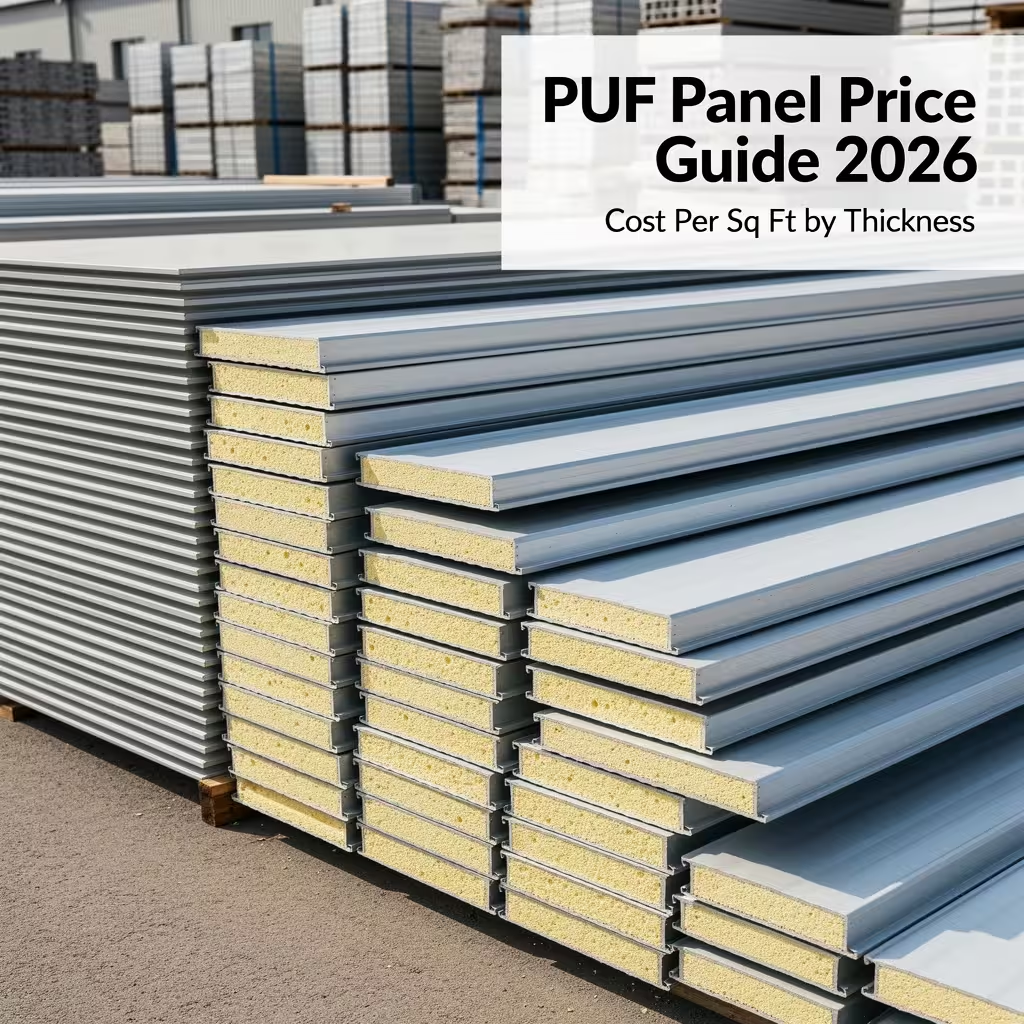
PUF is the abbreviation for polyurethane foam. A PUF panel is constructed like a sandwich, having the core of rigid polyurethane foam glued between two metal facings, which are usually made of pre-painted or galvanised steel sheets. The insulating task is performed by the foam core as it is characterized by very low thermal conductivity, resulting in minimum heat transference through the panel in comparison to brick, concrete or regular sheet insulation.
PUF panel is an insulated construction panel made with two outer sides of metal sheets and a rigid core of polyurethane foam. The insulated core of the PUF panel may resist heat, while the metal sheets increase its structural strength to provide insulation for cold storages and refrigerated locations.
Companies appreciate PUF panels because of their ability to perform both insulation and construction tasks at the same time by blocking cold via one panel only rather than the traditional method of constructing a wall and then adding insulation, which in turn saves time and labor, minimizes leakage points, and offers a sanitary surface that is easy to maintain.
Why PUF Panels Are Essential for Cold Storage
An efficient cold room needs perfect insulation to be effective. If the insulation panels are smaller than needed, badly fixed, or consist of low-density foam, its cooling efficiency will suffer and the refrigeration appliance will have to work double time.
The first significance of PUF panels resides in maintaining a stable internal temperature. Stable temperature inside is necessary for keeping the products from going bad and pharmaceuticals free from alteration.
Energy efficiency refers to the cold room temperature stability. A cold room with good insulation loses less air, thus requiring less frequent use of the compressor.
Moisture resistance is an aspect of buildings that is meaningful because of the geographical location of the country. The region of Delhi NCR has high level humidity for a large portion of the year, which means any moisture that gets within the wall assembly will make the insulation inefficient and promote rust or fungi formation. When connected correctly, the PUF panel systems can avoid moisture penetration without the risk of anything happening.
Then, food safety and pharmaceutical regulations need a controlled environment that is free from impurities. With smooth panel surfaces, it does not collect dirt as the porous materials do, so it is easier to clean and inspect the panels.
Applications of PUF Panels
PUF panels show up across a wide range of temperature-sensitive facilities:
- Cold rooms — for short-term or long-term storage of perishable goods
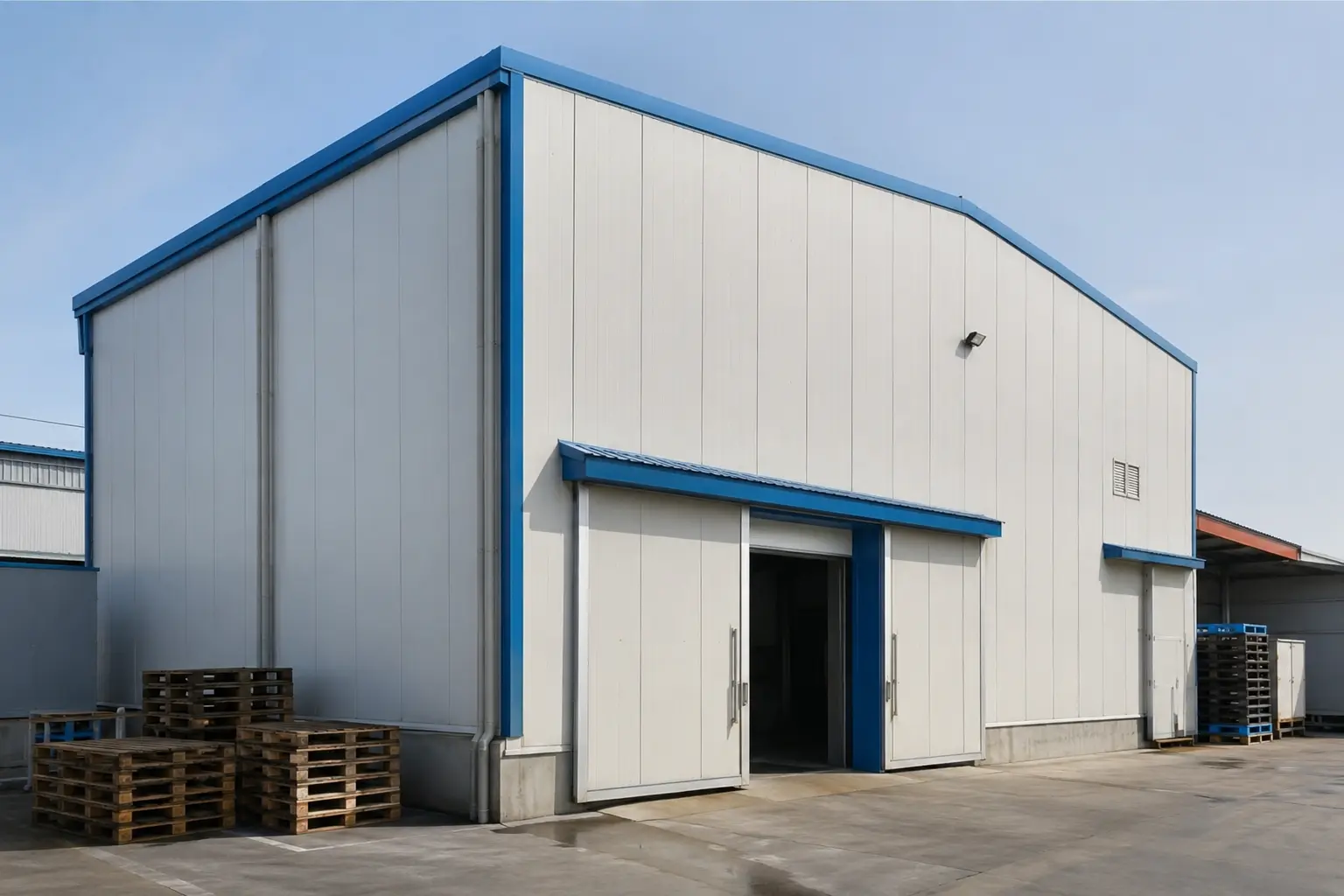
- Cold storage warehouses — large-scale bulk storage for fruits, vegetables, meat, and processed foods
- Food processing units — where hygiene and temperature control are both non-negotiable
- Dairy plants — for milk and dairy product storage at precise temperatures
- Hotels and restaurants — walk-in freezers and chillers for kitchen operations
- Pharmaceutical warehouses — for temperature-sensitive medicines and vaccines
- Logistics and distribution centres — cross-docking and staging areas for cold chain goods
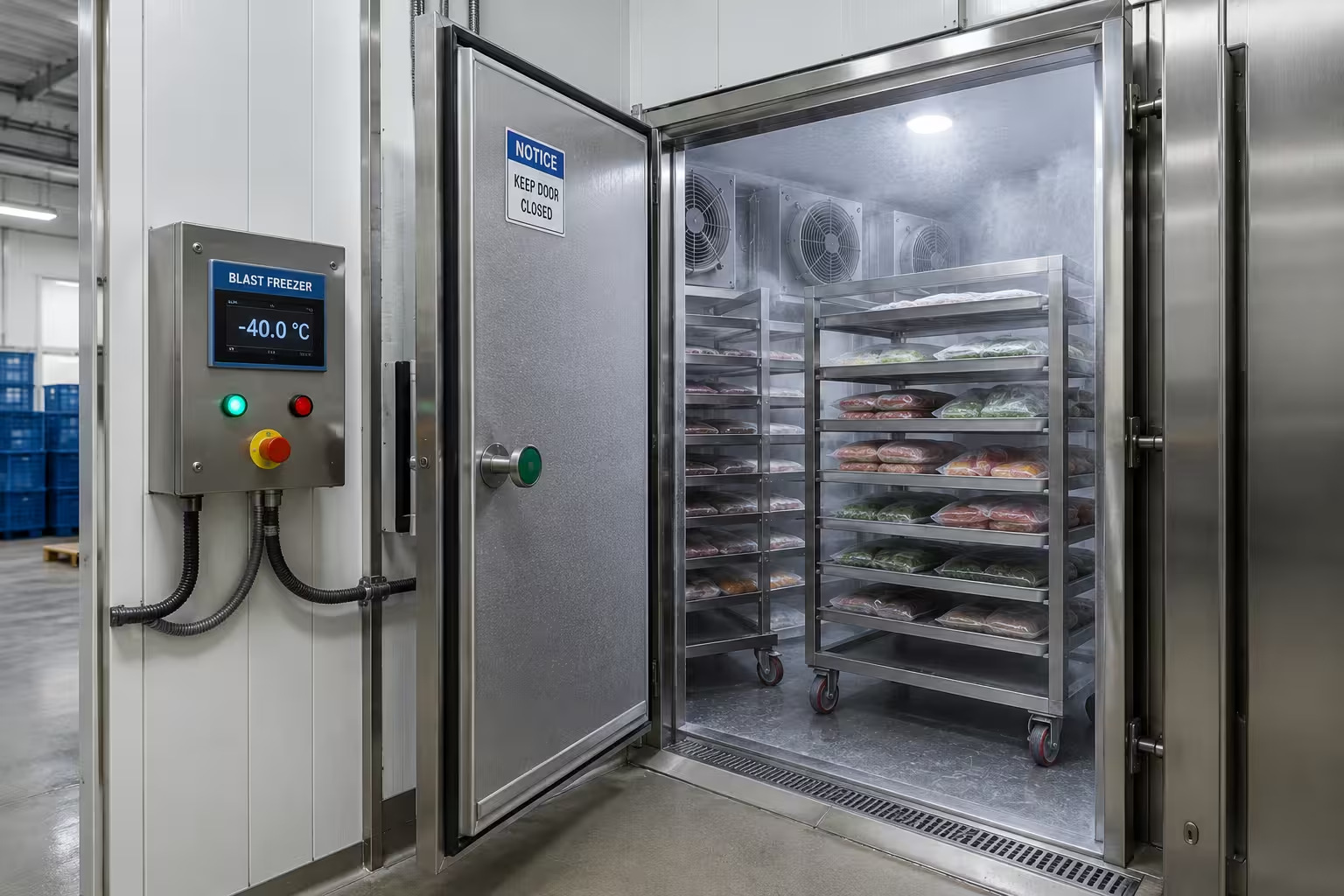
- Industrial refrigeration setups — including ripening chambers and blast freezing rooms
Each of these settings has slightly different temperature and humidity requirements, which is why panel thickness and density are never one-size-fits-all decisions.
Benefits of High-Quality Insulated PUF Panels
PUF panels don't always perform identically as the variations come from the quality of foam, panel thickness, and manufacturing processes. Therefore, here's what a good quality panel guarantees:
- Effective thermal insulation — minimizes the load from refrigeration equipment and keeps indoor temperatures constant.
- Structural integrity — strong despite being lightweight, which makes it easier to use and minimizes the pressure on the building framework.
- Durability — resists warping or delaminating under repeated temperature cycling.
- Fast installation — compared to traditional brick-and-insulation construction, since panels arrive pre-fabricated and are joined on site.
- Hygienic — low-porosity material that's easy to clean and doesn't absorb moisture or smells.
- Fireproof grades available — panel producers can offer different fire-resistance levels, which must be verified individually for every particular project.
- Low maintenance costs — installation is straightforward and only requires minor inspection work afterwards.
- Long service life — provided the panels are handled, stored, and installed according to manufacturer guidelines.
High-Quality vs Low-Quality PUF Panels
| Feature | High-Quality PUF Panels | Low-Quality Panels |
|---|---|---|
| Insulation | Consistent thermal performance across the panel | Uneven foam density, cold spots |
| Durability | Resists cracking and delamination over years | Prone to warping and joint failure |
| Energy Efficiency | Lower compressor load, stable running costs | Higher electricity consumption over time |
| Maintenance | Minimal upkeep needed | Frequent resealing and patch repairs |
| Lifespan | Extended service life with proper care | Shorter usable life, earlier replacement |
| Installation | Precise fit, tight joints | Gaps and misalignment common |
| Cost Over Time | Lower total cost of ownership | Lower upfront cost, higher long-term expense |
How to Choose the Right PUF Panel Supplier in Delhi NCR
Find a supplier who will guide you on the exact panel density and thickness required for your temperature-controlled storage, who has practical cold storage experience in carrying out projects, who will provide technical assistance apart from selling panels, and who also gives some level of after-sales support for maintenance or repair.
A few practical points to check before committing to a supplier:
- Panel density and thickness. The panel should be chosen according to its technical performance characteristics, which influence how well it provides thermal insulation at a specific temperature. A refrigeration unit operating at sub-zero temperatures has requirements that differ from the ones needed in the case of a dairy room at a temperature above zero.
Thickness of panels is determined by the required temperature for storage. Lighter panels are employed in cold storage (0°C and above) relative to blast and deep-freeze applications, where thicker panels are needed in order to maintain low temperatures as effectively.
- Installation quality. Even quality panels can't perform well without correct sealing of the connections. You should ask the installation team how they address junctions, floor-wall sealing, and door frame integration issues.
- Customisation. Every cold room layout is unique, with different types of doors, different ceiling heights, and racking. A supplier able to suit the layout to the requirements will eliminate costly mistakes later.
- Technical support and project experience. A supplier with prior work in cold storage, blast freezer, and ripening chamber installation will catch design problems that someone new to the field wouldn't notice.
- After-sales service. The panels and seals require periodic upkeep. Make sure you ask the vendor if they provide maintenance services and repair support after the installation is completed.
Design and Installation Support for Cold Storage Projects
A cold storage project generally consists of two roles: sourcing the PUF panels and designing the layout and the installation. Singhania Refrigeration is solely focused on the design and installation, which involves site assessment, project layout, panel specification, actual fitting and sealing, quality control, and after-sale service.
The task of sourcing the panels is carried out separately via the customer's supplier, while the designing and installation process refers to how the panels are assembled to create a shell of the cold storage facility.
A Typical PUF Panel Installation Process
A cold storage insulation project generally follows a structured sequence:
- Site assessment — evaluating the space, structural constraints, and intended storage temperature
- Planning — working out panel layout, door placements, and integration with refrigeration equipment
- Panel selection — confirming the right thickness and density for the target temperature range
- Installation — fitting and sealing panels with attention to joints, corners, and floor-to-wall connections
- Quality inspection — checking seal integrity and structural fit before the space is put into use
- Handover — briefing the client on the completed facility and any maintenance recommendations
Industries That Use PUF Panel Cold Storage
PUF panel cold storage and insulation setups are common across a number of sectors, including:
- Food Processing
- Dairy
- Seafood
- Hotels and Restaurants
- Hospitals
- Pharmaceuticals
- Agriculture
- Floriculture
- Logistics
- Warehousing
Each sector brings its own storage temperature and hygiene requirements, which is factored into project planning from the start.
Frequently Asked Questions
What thickness of PUF panel is best for cold storage?
The storage temperature has an impact. Chill storage generally needs less thickness than deep freeze and blast freezer rooms, which need thicker panels to keep very low temperatures without excessive energy consumption.
How long do PUF panels last?
PUF panels can last a long period of time if they are installed properly. Actual lifespan is influenced by the density of the foam, the quality of the panels, as well as the quality of the maintenance of the joints.
Can PUF panels be customised?
Yes. The panels have various dimensions that are made to fit the required layout of the space, door sizes, ceiling heights, etc. This is typical in cold storage projects, as layouts are rarely standardized.
Are PUF panels waterproof?
Metal facings and foam core materials resist moisture well on their own — moisture problems in cold storage buildings generally occur due to poor installation rather than the panel material itself.
Do PUF panels reduce electricity costs?
With good insulation, the refrigeration compressor doesn't have to exert as much effort to keep the temperature, leading to lower operating costs compared to places with bad insulation.
Why is professional installation important?
A panel's effectiveness depends on its joints. For example, any gaps or misaligned joints will allow cold air to escape and moisture to come inside, which gives the panel a bad name regardless of how good its quality is. Experienced installers know how to deal with connections, corners, doors, and floors correctly.
What foam density is used in cold storage PUF panels?
Foam density varies with the application and is usually specified in terms of the requirement for insulation performance and structural load. A supplier can suggest the density based on the temperature and span of a given panel.
Do PUF panels work for both walls and ceilings?
Indeed, PUF panels are often used in cold rooms for wall and roof construction, providing a continuous insulated envelope in the storage area.
Can existing buildings be retrofitted with PUF panels?
In many instances, yes. Retrofitting is influenced by the current structure, yet PUF panel systems are typically used to turn ordinary structures into insulated cold storage facilities.
How soon can a PUF panel cold room be installed?
The construction time frame of any project largely depends on its size and complexity, however prefabricated panels typically shorten the construction process considerably in comparison to conventional bricks/insulation technology.
Final Considerations
Finding the correct panel specification, and having it installed, is the key factor which can determine whether the cold storage facility operates effectively for years or is in need of constant monitoring and repairs. It is always worth looking at sourcing and installation of panels as two different processes, which need to be executed by companies experienced in cold storage.
For cold room, cold storage warehouse, blast freezer, or ripening chamber projects in Delhi NCR, Singhania Refrigeration is in charge of designing and performing installation of the system. Explore our range of PUF panels, or get in touch to discuss your project.