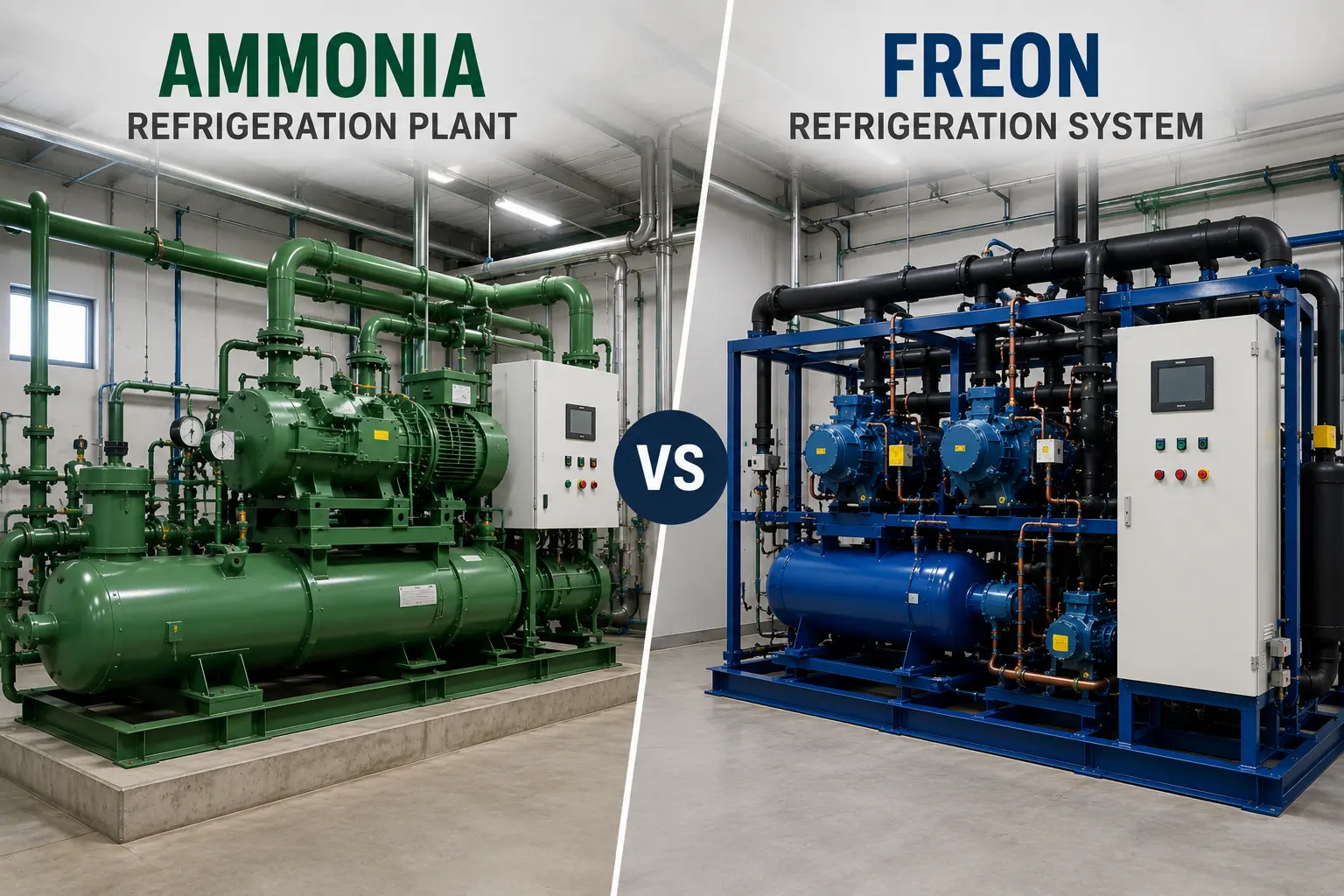
Selecting a refrigerant is among the first and most important steps in any cold storage facility project, as it influences operating costs, compliance with safety regulations, labor requirements, and facility design. In general, specialists' choices come down to two options: an ammonia refrigeration plant or a freon-based system. These two systems have been used in commercial refrigeration for many years and work equally well in certain applications. The choice depends not so much on one refrigerant being better than another, but rather on the specific project size, budget, and safety conditions. This guide explains how each option works, what their differences are, and what to consider before making a choice. Ammonia (NH3) is a natural refrigerant that has been applied in industrial refrigeration for well over a century. The ammonia refrigeration system carries the same advantages of any classical thermodynamic-cycle system, while benefiting from thermodynamic characteristics that give it a high level of efficiency in the heat absorbed and released per unit of refrigerant. This efficiency is the reason ammonia refrigeration plants dominate large-scale cold storage: warehouses, dairy processing facilities, and food distribution centers that operate around the clock and need low operating costs over the long term. Ammonia also has no ozone-depleting potential and an insignificantly low global warming potential, keeping it popular as environmental regulations tighten around chemical refrigerants. The trade-off is that ammonia is toxic in concentrated form and has a strong, distinctive odor. That odor doubles as a safety feature — leaks are noticed right away, long before dangerous levels are reached. But it also means ammonia plants need good ventilation, leak-detection equipment, and skilled personnel. "Freon" has become the everyday name for synthetic refrigerants, including HFCs such as R404A and R507A, now the most common in freon refrigeration systems. Earlier refrigerants such as CFCs and HCFCs have been largely banned by environmental authorities. Freon refrigeration systems run on the same compression-cycle principles as other systems, but the refrigerant itself is largely non-toxic and non-flammable, which simplifies installation and servicing — no advanced ventilation, alarm systems, or special training required, unlike an ammonia system. That simplicity is why freon refrigeration systems power many small- and medium-capacity cold storage solutions: retailers, transport refrigeration, hotel walk-ins, and warehouses where a full ammonia system wouldn't be cost-effective. Side by side, the practical differences between the two systems become clear: If you're comparing equipment for a new build, our ammonia refrigeration units and freon refrigeration systems pages cover full specifications for each range. There isn't a single right answer; the decision usually comes down to a handful of practical factors: As a rule of thumb, large cold storage operations that run continuously tend to favor ammonia, while smaller facilities that can't accommodate ammonia's safety requirements opt for freon. Anything in between calls for a proper load and cost analysis before deciding. Both types of installations require routine maintenance, but the nature of that maintenance differs. Ammonia plants typically undergo planned assessments of ventilation systems, gas detectors, and safety shut-off systems, in addition to basic compressor and condenser servicing. This means the operation needs either in-house trained personnel or a maintenance services agreement. Freon installation maintenance more closely resembles conventional low-temperature servicing: regular leak inspections, compressor servicing, and refrigerant top-ups, usually handled by general refrigeration specialists without additional safety certification. This makes freon maintenance less costly — a key reason smaller cold storage operations without certified on-site staff choose it. The plant can ensure safety only if proper ventilation has been adopted, a leak detection system is in place, and staff is adequately trained. Due to ammonia's strong smell, a leak is noticed quickly, before harmful levels are reached. The main reason is efficiency. Thanks to its thermodynamic properties, ammonia transfers heat better than synthetic refrigerants, leading to lower energy costs. "Freon" is a trade name commonly used for synthetic refrigerants such as R404A and R507A. Older CFC and HCFC refrigerants also fell under this name but have largely been phased out. Some older synthetic refrigerants have been phased out due to ozone depletion concerns, and newer HFCs face phase-down schedules tied to their global warming potential. Freon-based systems in general use are still common, but the specific refrigerants used continue to shift under environmental regulation. Due to higher efficiency, ammonia refrigeration plants generally have lower running costs when operated at a larger scale. In smaller units, that difference may be too small to justify the higher upfront investment in an ammonia facility. It's uncommon but not unheard of. Some larger facilities run ammonia for primary bulk cold storage while using standalone freon units for smaller applications, such as transport or retail display cases, where a full ammonia safety build-out wouldn't be practical. The two systems are kept in separate loops rather than mixed within a single circuit. Ammonia plants require adequate ventilation, gas leak detection systems, and safety shut-off systems, along with personnel trained to operate and maintain the facility safely. Maintenance of freon systems is often easier than that of ammonia systems, since ammonia systems require special safety infrastructure. Still, standard refrigeration maintenance procedures, such as leak testing and compressor servicing, apply to both. Ammonia has zero ozone depletion potential and minimal global warming potential. Many synthetic refrigerants carry some global warming potential, which is one reason regulations increasingly favor natural refrigerants like ammonia for large projects. Weigh the size and hours of continuous operation, upfront investment versus operating cost, and the safety infrastructure and trained staff the project would need. Both ammonia-based refrigeration plants and freon-based systems succeed in cold storage, but the right choice depends on the scale of operations, budget constraints, and workplace safety standards. Singhania Refrigeration specializes in designing and implementing ammonia and freon refrigeration systems for cold storage facilities across Delhi NCR, and can help calculate facility loads for specific projects in India.
Explore our cold chain solutions, or get in touch to find the right specification for your business.Ammonia vs Freon Refrigeration: Which Is Better for Cold Storage?
What Is an Ammonia Refrigeration Plant?
What Is a Freon Refrigeration System?
Ammonia vs Freon Refrigeration: Key Differences
Feature
Ammonia Refrigeration
Freon Refrigeration
Refrigerant type Natural (NH3) Synthetic (HFC, e.g. R404A, R507A) Energy efficiency Generally higher at large scale Moderate, less efficient per ton at scale Toxicity Toxic at high concentrations, strong odour aids leak detection Low toxicity, odourless — leaks harder to detect without sensors Flammability Mildly flammable in certain conditions Mostly non-flammable Environmental impact Zero ozone depletion, negligible global warming potential Some HFCs carry moderate-to-high global warming potential Typical facility size Large industrial cold storage, bulk warehousing Small to mid-sized cold rooms, retail, transport Upfront investment Higher — safety systems, ventilation, trained staff Lower for smaller-footprint systems Running cost at scale Lower per ton of refrigeration over time Higher operating cost as scale increases Safety infrastructure Ventilation, leak detection, trained personnel required Standard refrigeration maintenance, no special certification typically needed Advantages of Ammonia Refrigeration Plants
Advantages of Freon Refrigeration Systems
Which Is Better for Your Cold Storage Facility?
Maintenance and Operating Considerations
Frequently Asked Questions (FAQ)
1. Is ammonia refrigeration safe for cold storage facilities?
2. Why is ammonia used in large cold storage plants?
3. What refrigerants are typically called "Freon"?
4. Is freon refrigeration being phased out?
5. Which system has lower running costs long term?
6. Can ammonia and freon systems be used together in the same facility?
7. What safety measures does an ammonia plant need?
8. Does freon refrigeration need less maintenance?
9. Which refrigerant is more environmentally friendly?
10. How do I decide between ammonia and freon for a new cold storage project?
Summary